No symbol is more closely bound to the Christian faith than the cross. It crowns church steeples and marks gravestones, hangs at the throat and stands upon the altar, and is traced over the body in prayer. Yet the cross began not as a sign of hope but as an instrument of death — and the story of how it became the emblem of a worldwide faith is, in miniature, the story of the Christian gospel itself.
From instrument of death to sign of life
Crucifixion was a Roman method of execution reserved for slaves, rebels, and the lowest of criminals. It was deliberately public, deliberately slow, and deliberately shameful. For the first Christians, then, to proclaim a crucified Saviour was, in the words of the apostle Paul, “unto the Jews a stumblingblock, and unto the Greeks foolishness” (1 Corinthians 1:23).
The earliest believers were therefore slow to depict the cross openly. They more often used quieter symbols — the fish, the anchor, the Good Shepherd. It was only in the fourth century, after the Emperor Constantine ended the persecution of Christians and himself took up the sign, that the cross emerged as the faith’s central and public emblem. From that time its use spread swiftly, and it has remained ever since the universal mark of Christianity.
The cross and the crucifix
Christians distinguish between two closely related forms. A cross is the bare shape itself — two beams, empty. A crucifix is a cross that bears the figure, or corpus, of the crucified Christ.
The difference is one of emphasis rather than disagreement. The crucifix, used especially in the Roman Catholic and Orthodox traditions, keeps the eye on the suffering and sacrifice of Christ — the price that was paid. The empty cross, favoured in most Protestant churches, points beyond Good Friday to Easter morning: Christ is not on the cross, for he is risen. Both proclaim the same gospel, seen from different sides.
Forms of the cross
Across two thousand years, Christians in different lands and traditions have shaped the cross in many distinct ways. Each form carries its own history and meaning.
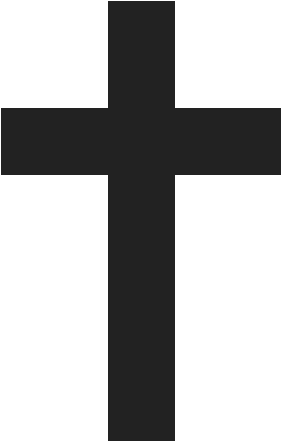
Roman Cross
Better known as the Latin cross: a tall upright crossed, above its centre, by a shorter bar of equal width. The most familiar form of all.
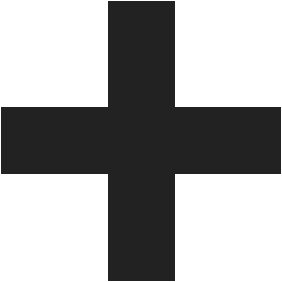
Greek Cross
Also called Saint George’s cross, with four arms of equal length. The same shape serves today as the universal emblem of the Red Cross.
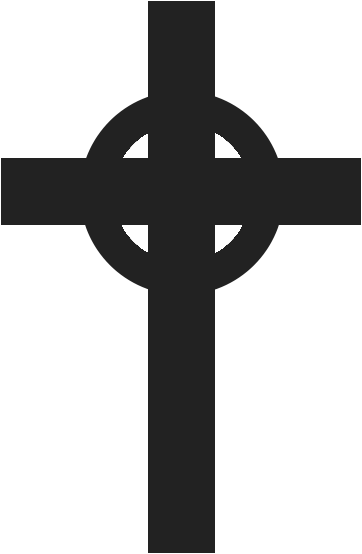
Celtic Cross
Rising from the early church of the British Isles, it sets a Latin cross within a ring — a form found on countless standing stones across Ireland, Scotland, and Wales.
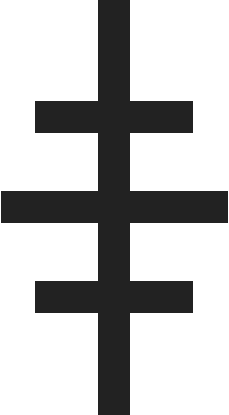
Patriarchal Cross
A double-barred cross, also called the archiepiscopal cross. Its shorter upper bar represents the title board fixed above Christ at the crucifixion.
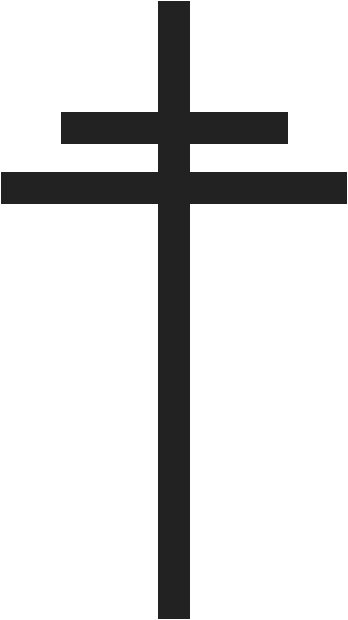
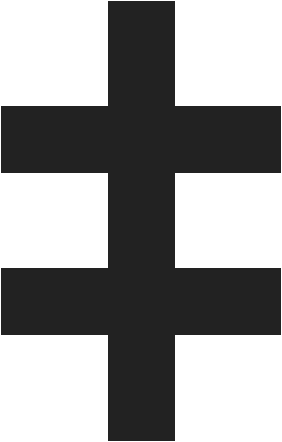
Cross of Lorraine
A two-barred cross, with a single upright crossed by two horizontal beams. It is known simply as the two-barred cross.
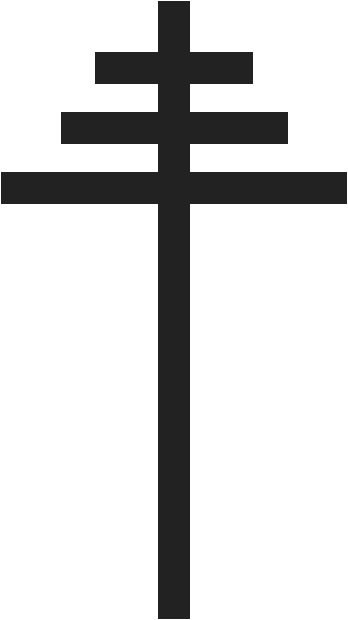
Papal Cross
A cross of three crossbars, the official heraldic sign of the office of the Pope, appearing in papal coats of arms and statuary.
Cross of Salem
Also called the pontifical cross, it is carried before the Pope in solemn processions. The same three-barred form appears in the symbolism of Freemasonry.
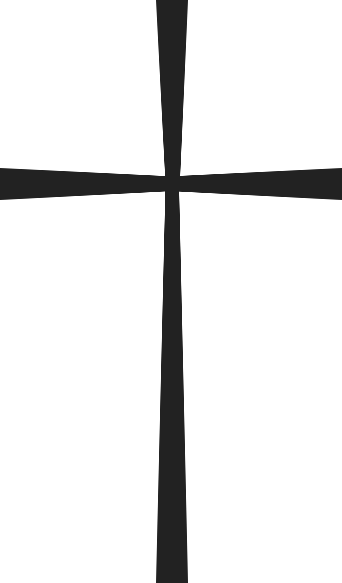
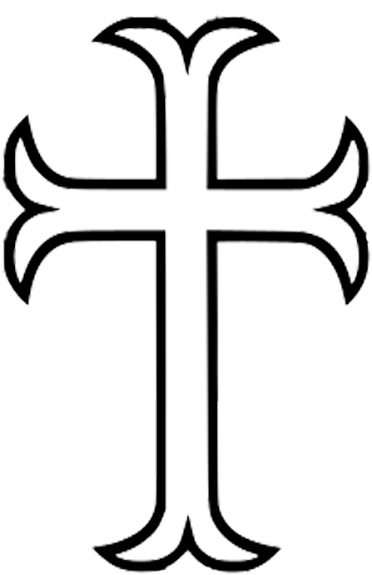
Byzantine Cross
Seen most often in Eastern Orthodox churches, though by no means in all of them. Its arms commonly broaden as they reach outward.
East Syrian Cross
Also known as the Syriac Orthodox cross, it is the chief symbol of the Syriac Orthodox Church, which traces its founding to the apostles Peter and Paul.
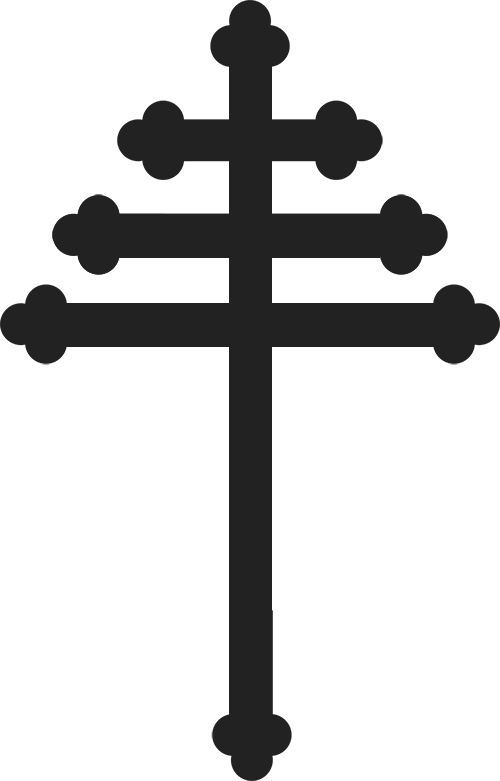
Maronite Cross
The cross of the Syriac Maronite Church of Antioch. A budded cross whose upright is crossed by three horizontal bars of differing lengths.
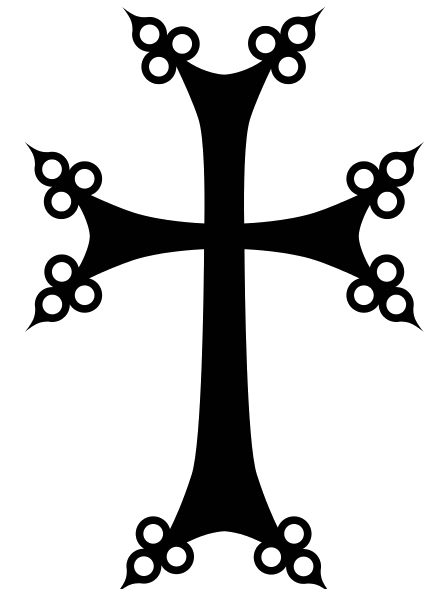
Armenian Cross
Used in the carved stone khachkars of Armenian churchyards. It is adorned with floral motifs and rests on a base whose parts signify the Holy Trinity.
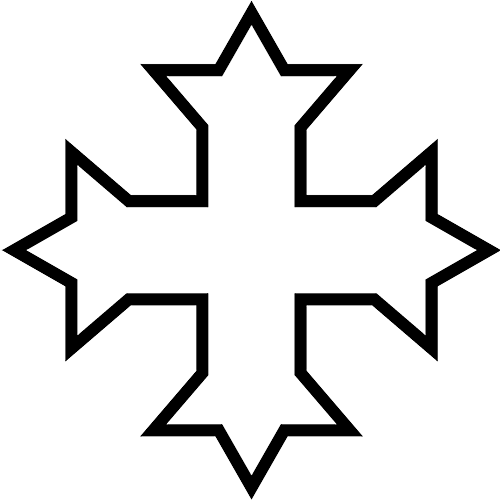
Coptic Cross
The cross of the Coptic Church of Egypt. Some variants enclose the cross within a circle, a form thought to descend from the ancient Egyptian ankh.
Maltese Cross
An eight-pointed cross bound to the Order of Saint John — the Knights Hospitaller — and, through them, to the island of Malta.
Jerusalem Cross
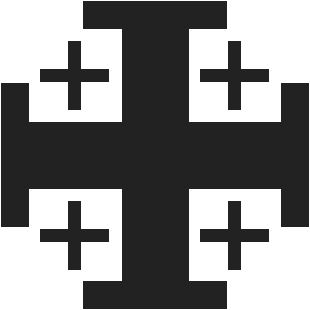
Also called the Crusader’s Cross: a large central cross with four smaller crosses set in its angles. It was the emblem of the medieval Kingdom of Jerusalem.
Stepped Cross
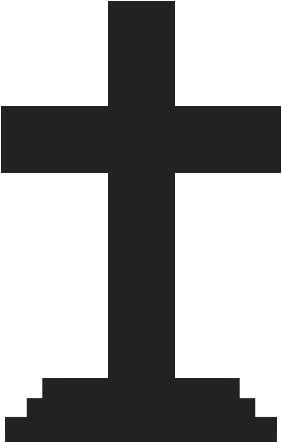
A cross raised upon three steps, also called the Calvary cross. The steps are often read as faith, hope, and love. It is most common in Brittany, in France.
Budded Cross
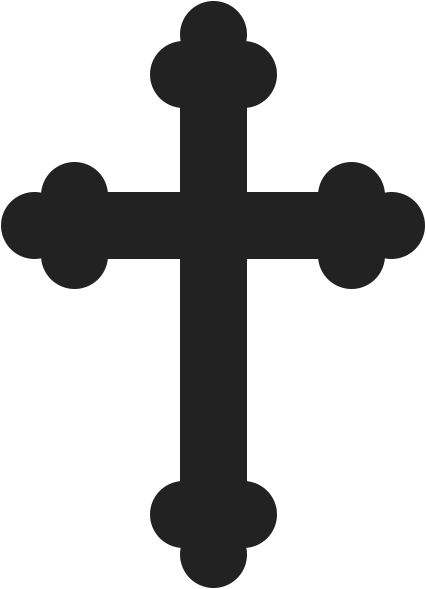
A whole family of crosses whose arms end in three-lobed buds. The buds, often read as a sign of the Trinity, embellish many of the more common cross forms.
Chi-Rho Cross
The oldest form of the Christian cross, made by overlapping the first two letters, X and P, of the Greek word Christos.
Tau-Rho Cross
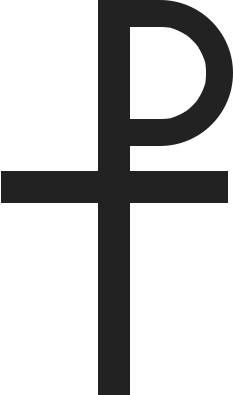
Also called the monogrammatic cross or staurogram. The Greek letters T and P are combined into a single sign picturing Christ upon the cross.
Gnostic Cross
Built from a vertical bar, a horizontal bar, and a circle resting above. The form draws on a symbol older than the Christian faith itself.
A sign to live by
Whatever its form, the cross proclaims a single truth: that God met human sin and death not by avoiding them but by entering into them. It is at once the darkest moment in the Christian story and its brightest, for the church has never been able to speak of the cross for long without also speaking of the empty tomb.
This is why believers wear it, raise it over their churches, and trace its shape upon themselves. The cross is not a charm or a decoration but a confession — a daily reminder of a love that, as the old hymn has it, was so amazing and so divine that it demanded the soul, the life, the all.